Social Site

Sunday, January 13, 2013

Will Europe Force Google to Change How it Displays Search Results?

Although Google escaped relatively unscathed from a U.S. antitrust investigation into its business practices by the FTC, Europe may bring a less favorable result for the dominant search engine, based on comments by the EU competition commissioner.

Joaquín Almunia’s chief concern isn’t Google's algorithm, however. He’s more concerned with how Google presents their own services.

In an interview with the Financial Times, Almunia accused Google of giving itself preferential treatment by “diverting traffic” to its own vertical search products, including Google Maps, Flights, and Shopping.

"They are monetizing this kind of business, the strong position they have in the general search market and this is not only a dominant position, I think – I fear – there is an abuse of this dominant position," Almunia told the Financial Times. Google commands around 90 percent of the search market in Europe.

One possible remedy may be a change to how Google brands and displays its own products in the search results.
Google is expected to present a plan to address the EU’s concerns, but Almunia warned that “he would be ‘obliged’ to issue formal charges if its proposal – expected this month – is unsatisfactory,” according to Bloomberg.
Enhanced by Zemanta

Friday, January 11, 2013

SEO Link Building Best Practices for 2013: Interview with Neil Patel

Neil Patel
Neil Patel (Photo credit: toprankonlinemarketing)
Image representing Neil Patel as depicted in C...
Image via CrunchBase
I recently had the pleasure of interviewing Neil Patel, founder of KISSMetrics. We discussed SEO link building best practices, misconceptions, and future insights for 2013 and beyond. Below is the transcript of the interview.

Jayson DeMers: What’s up, guys? My name is Jayson DeMers. Today I am here with Neil Patel, the founder and CEO KISSMetrics.com, as well as QuickSprout. Neil Patel is an expert at SEO link building and especially post-Penguin SEO link building, and so that’s gonna be the topic of our discussion today.
Let’s go ahead and dive right in. Neil, thanks for taking the time to chat with me today.
Neil Patel: No problem. Thank you for having me.
JD: My first question for you is, SEO link builders know that, really, the four elements of links are quantity, quality, diversity, and velocity. Can you speak briefly about how to define an ideal measurement for each of these in any given niche?
NP: So the way I look at it is, you take all those elements and you figure out what the ideal mix is. And most cases, no matter what industry, I’m a big believer it’s better to get quality over quantity. Sure, if you want to rank for “credit cards”, “online poker” or whatever it may be, you’re gonna need some sort of quality, I mean quantity, but most people don’t realize, SEO 10 years ago, if you threw out tons of quantity links, you get high rankings.
These days, if a competitor has a thousand or ten thousand or hundred thousand links and you merely have a hundred, you can still outrank them if your quality is better, and you’re growing organically over time. So, the velocity is much slower instead of getting a thousand links every single day or every few weeks or. It’s like get a handful of links if you’re trying to rank for “dog food”, your best link, quality wise, is someone who already ranks for “dog food” in the top thousand, if not top hundred. Find out those pages, hit them up, try to get a link, right?
And on top of that, you want to make sure the anchor text is diversified. You don’t want to just have “dog food” as all of them, because if it’s all “dog food”, it’s not natural. It needs to be rotated up, have multiple keywords in there, look as natural as possible from the domain name, to the title tag of the page, or the keyword, other various keywords that are related to that main keyword, so forth and so on.
But those are the main ways that I would build links. Slow and steady wins the race. Go for quality and don’t go for speed, right? And don’t try to go out there and buy thousands of links or you don’t even need to buy any links. If you just write really good content, pretty good product or service, you can get rankings more quickly and better than most people out there who are spending thousands of dollars a day on link buys.
JD: Understood. You talked a little bit about anchor text. I think that the anchor text distribution that used to be a best practice pre-Penguin has changed completely post-Penguin. Would you agree, and what would you say, how has it changed?
NP: Yeah, a lot of time, pre-Penguin, a lot of people do rich anchor texts and too much rich anchor texts was like 50, 60 percent of the keywords were exact match, but that just doesn’t work as well today. And the funny thing is that I haven’t been hit by Penguin updates, but I never tried to build links which they are all rich. Never tried to go out to build links and say, “Hey! Give me a hundred links with those keywords.” Just more so natural, write great content, get a lot of links and with link building, though, just get links in one page, get it to your whole site, which is what’s natural if you write a lot of good content, with pretty a good product or service. Plus, the anchor text? Yeah, ideally you should, you don’t need to have a more rich anchor text than 10, 20 percent max.
Don’t try to go for 50, 80 percent. Just go out there, make it look natural, write good information and that starts building links naturally.
JD: Continuing along the lines of anchor text. What would you say, how’s the value of it changed? Clearly, pre-Penguin, rich or exact match anchor texts carry a lot of value. That’s why it’s so popular to use. But now, obviously you have to watch the amount of exact match that you use. But it still has some value, and would you say that that value makes it worth using to some extent, or would you stay away from using exact match because it can trigger the new Penguin algorithm.
NP: Exact match domains or exact anchor texts?
JD: Exact match anchor texts.
NP: You can use it to some extent.
JD: To some extent, so…
NP: It’s hard to avoid. You do need some exact match in there and I think it will help boost rankings, but you don’t need a ton of it, right? Well, before you may have needed 30, 40 percent, that what at least some people used. I’ve always been a big believer that your exact match should be 20 percent or less. Sometimes it’s hard to avoid if it’s your domain name is the name of the keyword you’re trying to rank for, then you’re going to get a ton of exact match links.
For example, my personal site is NeilPatel.com, I don’t rank a ton because I have so many links coming in that say “Neil Patel”. And that’s fine. Over Google’s updates they’ll fix it and I’ll naturally go on top because if you look the course of the history, it says that it should do well, tend to naturally do well over time, right? Because algorithms aren’t perfect, they’re made by humans, but they are doing a darn good job of weeding out all the trash.
But be careful. Don’t go out there and use too many exact match, but you still have to use exact match to some extent, it’s like I’ll never rank for “Neil Patel” if links coming into me don’t say that keyword. Even a small percent or at least that page is linking to me, need to have that keyword somewhere on that page.
JD: One of the tactics I think that is safe to use, maybe you’ll disagree with me, post-Penguin is guest blog posting. And when when guest blog posting is done, there’s commonly a resource box or an author bio at the end of the blog post. So, when you’re doing guest blog posting, how does the value of an in-content link differ from a link that’s in the author bio of the resource box?
NP: First of all, when you do a lot of guest posts, and you have your author bio and it’s the same thing over and over again, I’ve actually found that those links will boost your rankings a bit, but after a while, it starts going down or staying flat, and the reason being is it’s very rich, because whatever your author bio is, if you write 20 guest blog post on that same website, you have 20 links with same anchor text.
In-content is still the best type of links, but the key is when you’re doing guest author links, post-Penguin and Panda and all those updates, it’s not necessarily about, “Hey, here’s bio links.”
A lot of people would just say, “Hey, I’ve got a buddy at Business Insider and he’s gonna give me a guest account. I’m gonna write a shit blog post and get a link. And that’s a promise, not just the domain name that you’re getting a guest blog post from, but how good is the content, because if the content is good the social signals will go up because you get more tweets, Facebook shares, likes, so forth and so on. And then those pages tend to do better organically, get more visitors, more people naturally linking to them, and then the links from there will be better when they come into your site.
But, I’m a big believer of trying to get in-content links over author bio links. A few author bio links aren’t bad, but when you start getting 10, 20, 30 author bio links from the same website, and it’s the same bio on each and every page, that starts de-valuing yourself drastically and you’ll notice your ranking either flatlining or actually going down.
JD: On that note, on getting links from multiple domains, how many domains would you recommend to get from a single domain before you start seeing diminished returns?
NP: Hard to say, but they always say the first one has the most weight, right, assuming it’s from a good authoritative page. And as you get more and more of it diminishes, I really feel you don’t need more than two or three. I actually personally just go for one link per website. If it’s a good opportunity, like if I can continue to get links from Business Insider, I don’t care if it provides SEO value or not, and that’s why I think most webmasters should look at it, at the end of the day, if the site’s really powerful, and you write great quality content, and it’s gonna drive visitors over to you, and those visitors will convert into leads, paying customers, whatever your conversion source may be, who cares, right? Don’t go for a link just for SEO value. There’s more benefits to it than just that.
So, if you’re going for a strictly SEO value, focus on getting one link per domain name first, you know per site. So, if you have one site yourself, just get one link per site per, I guess, one guest blogging opportunity. But if you see that there’s value in these sites that you do blog post from, get as many as possible, because if they can keep on driving visitors to you, who cares?
For example, a guest blog post on Search Engine Journal and SEOMoz multiple times. I don’t care for, you know, hey, if I get a link from SEOMoz and Search Engine Journal, it’s gonna boost my rankings. I’d more so care for, hey, these sites have relevant audiences to what products I’m gonna sell, if I write great information, they’re gonna start trusting me and my company, and those visitors are gonna come into my website and convert sooner or later.
JD: Now, to switch gears a little bit. I’ve been told that some of the old style link building tactics such as article directories syndication, web 2.0 profiles and blog posting, has lost a lot of its value for tier one of building, which is link building essentially that goes to your money site or to your client’s site or your own website, but as for a tier two tactic, I’ve heard there has a lot of value. Have you seen any evidence of that?
NP: I have seen companies building links to their sites from authority sites, then taking links from tier two – the article submission directories, web 2.0 profiles and linking those to their Business Insider article. The problem I really see is you can’t go out there and do that. It’s not just a long-term play. Sooner or later, they’d devalue those links coming in to your site. They’re going to devalue them going to tier two sites, right, the sites that are linking to you, so I’m a big believer that you should just avoid them altogether. They’re crappy links, just a waste of time and they’re not put much value in the long run.
JD: What would you say is the value of links from social media sites like Twitter, Facebook, LinkedIn, Google+, YouTube, Pinterest?
NP: I think they’re great, and especially if they’re going into your internal pages. Search engines are using social signals. It’s all gonna all help boost rankings. Actually, I noticed one trend if you get a lot of shares, tweets, likes in a really short period of time, like five hours, 10 hours, you’ll notice your rankings will really climb to the top and then they’ll go all the way back down, but you’ll be in a much better place than if you never got those social shares, likes or anything like that. So the more you can get the better off you are.
JD: OK. Got it. What are some common mistakes that you see link builders making time and time again in a post-Penguin link building era.
NP: The big mistakes that I keep on seeing is they go for rich anchor texts they don’t put in the time and emphasis to get the link. If someone has the opportunity to get a link from Huffington Post, they just get out there, pop in a link right at top, make it rich in anchor texts and call it a day and write some gibberish content. It’s like, that’s not a great link, and yes, from Huffington Post, but go out there, write a great piece of content on Huffington Post. Sure if it’s relevant to link to your site, but by doing that, that article is then gonna get way more social shares, and I think that link’s gonna have way more value than if didn’t have social shares.
JD: OK. So, what are some commonly perpetuated myths that you see about SEO link building in today’s post-Penguin link building world?
NP: The biggest myth I have seen is see a lot of links to rank, and a good example of this, people for the term “forex” are building hundreds and thousands of links. I had a buddy who popped up a site, in less than two months, he’s ranking in the top two pages for the keyword “forex”. He sold it, said he doesn’t want it anymore. And he did it all with just a handful of links. He went and found sites that rank in the top thousand for the keyword “forex”, and asked them for a link and he just linked back. It worked out really well, he put a cool site with a cool product, tons of free information. No ads. Killed it.
So you don’t need a ton of links. Don’t go for quantity. Go for quality. And keep in mind, obviously he didn’t start with brand new site. His site didn’t have much on it, but the domain name is pretty old.
JD: So in terms of buying a domain name or getting an aged domain is not easy. Did your buddy buy it on auction or own it for a long time?
NP: On auction. And the key is he did not just buy an old domain name, he bought an old domain that had an old junk site on it, and had a few links, so that way it wasn’t an old domain with nothing on it.
JD: In your opinion what does the future of SEO link building look like? And I’m talking about one to two or maybe five years from now. What does it look like? How is it different from link building of today?
NP: I think there’s gonna be a lot more social signals. So think of it this way; pre-Twitter, and many of these social sites, when someone will link to you, they’ll write a blog post. And they would say, or bring into their website, “Hey, check out blah, blah, blah.” Now, a lot less people will go out, and they use social profiles to share whatever information they want to share.
So, I think you have an awesome article on AudienceBloom, right, which is your site, I would go out there, and now, instead of blogging on it, it’s much easier for me to just tweet about it, which is still as effective, right? Of course a link from a website has more weight than a tweet, but it’s still better than nothing, and it’s still pretty effective to get a lot of tweets.
So I think it’s what’s gonna happen in the next three to five years is they’re gonna put much more weight on social links, because less people are enticed to link from their blog due to the high usage of social sites and it’s much easier than to start a website. And keep in mind, one thing that you’ll see within this three to five year period is search engines valuating these social profiles and who links, and which social profiles carried more weight, and the reason being is it’s very easy to get a ton of people to tweet out a link, and the last thing they wanna do is count, “Hey, you got 5,000 tweets.” This must be good when you bought 3,000 of them and they are shitty tweets from user profiles that don’t have too many followers or don’t tweet much at all.
JD: If you had one piece of actionable advice, what would that golden nugget of advice be?
NP: The golden nugget would be get a lot of press. And the reason being pre-Penguin and post-Penguin, the one thing that I’ve always seen is if you build a good product or service, solve a problem and make that solution very easy and affordable, that usually tends to increase your odds of getting press. And if you can get a lot of press, you tend to rank better.
If you look today at companies that are on TechCrunch, and Mashable and all these social sites, they get a ton of these big sites come out all at once and they do in a natural fashion they tend to rank pretty well. Whether they get a, you know, for a specific feature set or fund raising or for whatever it may be, press helps pre-Penguin and Panda and post it right, like, I’ve seen press helps get better ranking at a much quicker pace.
JD: Well thank so much for your time today, Neil.
NP: Thank you for having me.

Key Takeaways

  • New-age link building is all about quality, not quantity. Spend the time to produce superb content and get it published on strong, authority publishers.
  • Diversify your anchor text; use no more than 10-20% exact-match anchor text.
  • Diversify the locations from which you get links.
  • In-content links are stronger than links from author bios.
  • The value of links from social media sites is worthwhile, especially if they're going to your internal pages.
  • Get media exposure for your product or service, and that will naturally turn into strong inbound links.
Enhanced by Zemanta

Wednesday, January 2, 2013

How to Use the Broken Link Building Strategy to Get Links

Image representing Google as depicted in Crunc...

You’ve likely read a lot about using broken links as a strategy. The questions that usually come up with this strategy are the following:
  • How do you find broken links that could turn into link building opportunities?
  • And how do you encourage the webmasters with broken links on their website to change the broken link to yours?
In this post, we’re going to look at broken link building tools, ways to discover broken links, and how to acquire them.

Why the Broken Link Building Strategy Works

Why is the search for broken links so important? It’s because it works. No webmaster that takes pride in their website wants to lead visitors to a 404 page or a business that is no longer operational.
Unlike the typical link request, you’re actually doing the webmaster a favor by not only letting them know they have broken links (a problem), but also giving them a replacement for those broken links (a solution).
I’ve personally used this approach to gain links on .EDU sites and other high authority pages. Assuming the website was still being maintained, the request was almost always a success.

The Best Broken Link Building Strategy Tools

First off, let’s look at some of the tools you’ll need to use for the strategies in this post.
  • CognitiveSEO: Their backlink reporting tool doesn’t just show you backlinks; it allows you to filter them by keywords, sort them by authority, and much more which makes it perfect to use when trying to find the best backlinks for broken links you’ve discovered.
  • Google Alerts: Keep up with the latest news about your competitors just in case one of them goes out of business. Jump on those opportunities as soon as possible, especially if you are not their only SEO-savvy competitor.
  • Check My Links or Link Checker: Browser extensions for Google Chrome and Firefox that allow you to see broken links on any webpage quickly. Use this on large resource / links pages to find out of date websites in the industries you are building links for.
Now, let’s dive into broken link discovery.

How to Discover Broken Links

The following are a few strategies to find broken (or soon to be broken) links that can help you build more links to your own websites:

1) Check resource lists.

While it’s hit and miss, the most common way to find broken links is by simply looking at resource link lists that fit the website’s industry that you are link building for to see if any similar websites are no longer operational.
For example, let’s say you are link building for an investment website. You can search for a variety of keyword combinations (such as investment resources inurl:links) on Google to find websites that link out to investment resources.
check-resource-pages-for-broken-links
Click on the most promising results and then use a browser extension to highlight broken links on the pages. These will highlight broken links on a page.
broken-link-checker-example
Now, let’s say that you were building a website that covered investment rarities. You could grab the broken link off of this example and run it through your backlink checking tool. Then you could start working to acquire the thousands of links built to this domain.

2. Monitor your competitors.

What’s the best news you could discover online? How about that a competing website with a ton of links has gone out of business. If you keep up with the latest news about your competitors, you may find out one day that they are going out of business.
For example, one of my favorite tools to use to schedule tweets is Buffer. Their biggest competition was Timely.is who recently announced that they were retiring. This is actually an even better broken link opportunity in the sense that while the website is not down, they are recommending Buffer as an alternative.
competition-out-of-business
Buffer could now use a backlink link checking tool to see what links Timely.is has built to their domain and attempt to acquire them. As a bonus, they can note that their former competitor endorses them. This is why it never hurts to monitor the news about your competition and businesses within the industry you are link building for. You never know when thousands of links could be up for grabs.

3. Don’t forget local opportunities.

If you’re working with a local business website, then don’t rule out local broken links. Yelp can be a good way to find similar businesses that have been closed in particular locations.
For example, let’s say you are link building for a tavern in the Phoenix area. You can use the following Google search for similar businesses in the Phoenix area that are now closed.
site:www.yelp.com intitle:closed intitle:phoenix tavern
You’ll get the following results:
google-search-broken-local-links
Visit these Yelp pages to find the website of the local taverns, then use your backlink reporting tool to find those websites’ backlinks.
local-broken-link-building-backlinks-found
Now, look at the details. If a business has only one location and it’s closed, it will be pretty easy as their website will likely be shut down as well. For local businesses with multiple locations (some of which may still be operational), the website may still be up—your goal then will be to find backlinks specifically referencing the locations that are actually closed.
Use a backlink reporting tool that allows you to filter backlinks by keyword, narrowing down the 182 links analyzed to just the ones for the closed Phoenix location, since the ones in Chandler and Chandler are still operational.
broken-local-link-building-narrow-backlinks-by-location
Now you can contact the webmasters that are linking to the closed tavern, letting them know it’s closed and that you have a new place they should try instead.

How to Approach Webmasters

Now that you know some ways to find broken links, your next goal is to contact the website owners and convince them to switch out their broken links with yours. Here are some ways to approach webmasters that might improve your chances of success:

As the Business Owner / Employee

First off, you can approach the webmaster as someone from the business itself. Let the webmaster know that the website / business that they are linking to is no longer in service, but that you provide similar information, products, or services. For bigger sites and blogs, maybe even consider offering them a trail of your product or service so they can see why they need to start recommending you in place of your former competitor.

As a Fan of the Website

The next approach is as a random visitor or fan of the website with the broken link. Let the webmaster know that you love the resources they share, but you just noticed that one of them is out of date. Then offer them one (or more) alternatives.

As a Marketer / SEO

Since there is a good chance that you are an marketer / SEO approaching the broken link strategy, this one is probably the most likely to apply to you. The catch when telling people you are an SEO when sending a link request? Website owners (especially bloggers) are getting privy to the game and looking for monetary compensation for adding links. The only way to get around this is to make your request as helpful to the webmaster as possible.
Let the webmaster know about their broken links, and then let them know about a good alternative or two, including the website you are building links for. If you focus your email more on helping the webmaster and less on your SEO goals, you’ll likely end up with a good response.

Additional Broken Link Building Resources

Want to learn more about the broken link building process, or simply want to make it easier? Here are some additional resources:
Do you use broken links as a part of your link building strategy? What tips and tools would you suggest?

Source -> http://www.searchenginejournal.com/how-to-use-the-broken-link-building-strategy-to-get-links/56885/

Enhanced by Zemanta

Happy New Year's Day 2013 From Google

Yesterday I shared with you all the logos and themes from the search industry for New Years Eve 2012. Well, today is New Year's Day 2013 and Google has a special logo just for the day.
Here is a picture of the logo:
New Year's Day 2013 Google Logo
As you can see, the logo is pretty busy. With people cleaning up the logo from the day before. Yes, much of New Year's Day involved cleaning up from New Year's Eve.
Here is the logo from the day before:
Google New Years Eve 2012 Logo
Looked like one heck of a party.
Wishing you all a happy, healthy and successful 2013!
Source- http://www.seroundtable.com/google-new-years-day-logo-16159.html

Thursday, December 20, 2012

13 New Year's Resolutions Every Marketer Should Make in 2013

The new year is the perfect time to kick your professional butt into gear. Whether you are a devoted resolution-maker or just want to know how you can be a better marketer, here are 13 changes every marketing professional should make in 2013.


1. Let go. Trying to do everything can be destructive to your team's efficiency and work flow. For example, just about everyone likes to contribute creative ideas to a content brainstorm. However, too many ideas increases the time it takes to narrow it down to one. Plus, not everyone is good at coming up with creative ideas. Some are best at coming up with the ideas, but may lack the focus to make it executable. Others might suck at coming up with the initial idea, but are exceptional at tailoring it to be truly epic.
Be honest about your capabilities and learn to let others take the reins when appropriate. It will allow you time to focus on what you are best at, contributing to a project in the most effective way possible.

Read more > http://searchenginewatch.com/article/2232888/13-New-Years-Resolutions-Every-Marketer-Should-Make-in-2013

http://www.centillien.com/company/Octane-i-InfotechLtd

http://www.webberid.com/profile/info/id/6621
Enhanced by Zemanta

Tuesday, December 18, 2012

Facebook Real Name Policy Challenged by German Privacy Watchdog

Image representing Facebook as depicted in Cru...

A German privacy watchdog has ordered Facebook (Nasdaq: FB) to stop enforcing its policy making users register their real names as a prerequisite to setting up accounts. While the Menlo Park, Calif.-based social media company began vigorously enforcing its real name policy this fall in the wake of a revelation that some 83 million user accounts were fake, the Independent Center for Privacy Protection (ULD) said that policy is “unacceptable” in a statement issued Monday.

The ULD demanded that Facebook begin allowing members to user pseudonyms for their social media profiles, saying the requirement violates German privacy laws and grants no benefit to consumers.
"It is unacceptable that a U.S. portal like Facebook violates German data protection law unopposed and with no prospect of an end," Thilo Weichert, the national privacy commissioner and head of the ULD, said in Monday’s statement. "The aim of the orders of ULD is to finally bring about a legal clarification of who is responsible for Facebook and to what this company is bound to."

Facebook promised to “fight” the charge “vigorously” in a statement emailed to the press, saying of the ULD that “the orders are without merit and a waste of German taxpayers' money.”
“It is the role of individual services to determine their own policies about anonymity within the governing law -- for Facebook Ireland European data protection and Irish law,” Facebook’s statement added.
The ULD is challenging Facebook’s real name policy on behalf of the northernmost German state of Schleswig-Holstein, which according to IT World means that the order could only be enforced in that region, whose capital is Kiel.

Weichert, however, argued that other German data-protection agencies would follow Schleswig-Holstein's lead in establishing a new legal precedent for Facebook.

“Actually, this should be in the interest of the company too,” Weichert said. “We hope for a fact-based debate not aimed at delaying action. In view of the fact that Facebook currently is taking the opportunity from all its members to decide themselves about their own discoverability under their name, our initiative is more urgent than ever.”

Facebook now has two weeks to contest the order in court.
Interestingly enough, another German state took a markedly different stance on social media transparency last October when police requested that Twitter remove an account affiliated with a neo-Nazi organization. The proliferation of pseudonymous social media accounts could create new problems for German police hoping to regulate hate speech.

Facebook shares rose around one percent during trading Tuesday, reaching $27.91 in late afternoon trading.


Enhanced by Zemanta

HTML Code & Search Engine Ranking Factors

Image representing Search Engine Land as depic...
Image via CrunchBase
HTML is the underlying code used to create web pages. Search engines can pick up ranking signals from specific HTML elements. Below, some of the most important HTML tags you should pay attention to.

Ht: HTML Title Tag

Imagine that you wrote 100 different books but gave them all the same exact title. How would anyone understand that they are all about different topics?
Imagine that you wrote 100 different books, and while they did have different titles, they weren’t very descriptive — maybe just a single word or two. Again, how would anyone know at a glance what the books are about.
HTML titles have always been and remain the most important HTML signal that search engines use to understand what a page is about. Bad titles on your pages are like having bad book titles in the examples above.
Think about what you hope each page will be found for, especially relying on your keyword research. Then craft unique, descriptive titles for each of your pages. For more help about this, see our tutorial below:

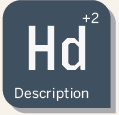
Hd: The Meta Description Tag

One of the oldest supported HTML elements, the meta description tag allows you to suggest how you’d like your pages to be described in search listings.
SEO purists will argue that the meta description tag isn’t a “ranking factor,” in that it doesn’t actually help your pages get a boost to the top. Rather, it’s a “display factor,” something that helps how you look if you appear in the top results because of other factors.
Technically, that’s correct. Yet, as search engines are looking at things like engagement, whether your listing even attracts a click is a ranking factor. A good description can increase the odds of that click. So we feel the meta description tag should be counted as a ranking factor.
Having a meta description tag doesn’t guarantee that your description will actually get used. Search engines may create different descriptions based on what they decide is most relevant for the particular query that a listing is shown for. But it increases the odds that what you prefer will appear. It’s easy to do. So do it.
Below, Search Engine Land articles that take a closer look at the meta description tag:

Hh: Header Tags

See the headline up at the top of this page? Behind the scenes, HTML code is used to make that a header tag, an H1 tag in particular.
See the sub-headlines on the page? Those also use header tags. Each of them is the next “level” down, using H2 tags.
Header tags are a formal way to identify key sections of a web page. Search engines have long used them as clues to what a page is about. If the words you want to be found for are in header tags, you might have a slightly increased chance of appearing in searches for those words.
Naturally, talk of header tag “boosts” has caused some people to go overboard. They’ll put entire paragraphs in header tags. That doesn’t help.
Header tags are useful when they reflect some logical structure to a page. If you have a main headline, using an H1 tag makes sense. Subheads in H2 make sense. Use headers as they make sense, and they may reinforce some of your other ranking factors. Don’t use them, and that’s OK. They’re a minor factor, anyway.
For more about headers, see our articles below:
Enhanced by Zemanta